How Barclays’ big play re-energized its Africa private wealth business

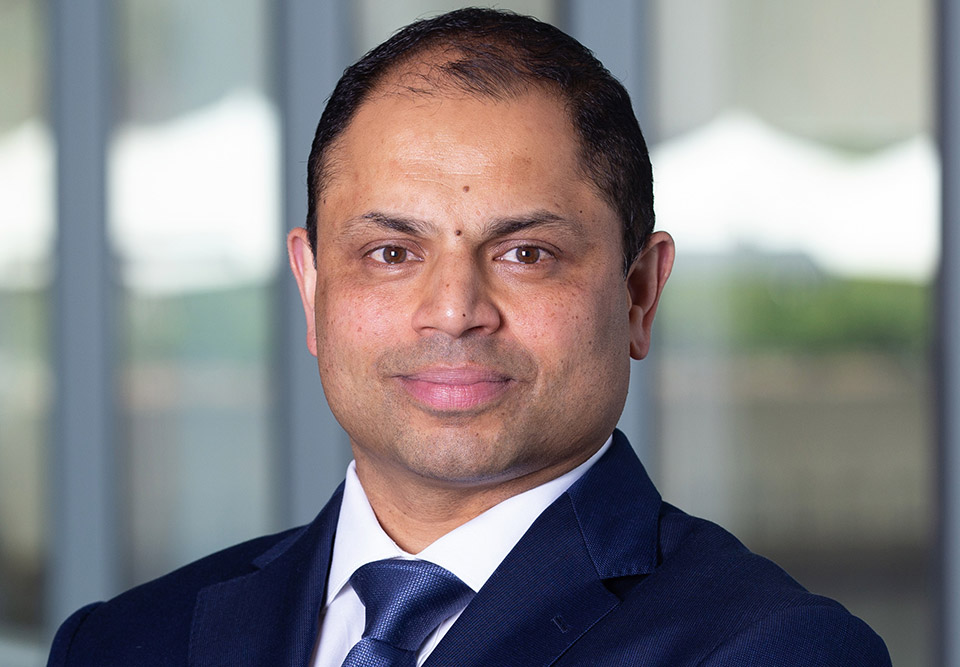
Bidding $2.5 billion for the bulk of Credit Suisse’s sub-Saharan Africa ultra-high net-worth private bank book 18 months ago has been a ‘game changer’ for Barclays in the region, the UK bank’s Africa market head Amol Prabhu tells Euromoney.

In November 2021, Amol Prabhu and Rahim Daya, senior bankers at Barclays, got wind of the fact that Credit Suisse was keen to offload a sizeable chunk of its Africa private banking business.

The Swiss lender, now owned by UBS, was once again draining the bitter cup, having slogged its way through a year that saw it clobbered by the Archegos and Greensill scandals, and that culminated with it swallowing a SFr1.57 billion ($1.75 billion) full-year loss.

Prabhu, the UK lender’s South Africa country chief and Africa market head, and Daya, CEO of its Swiss private bank and head of Middle East operations, jumped into action.

Credit Suisse had just unveiled a strategic refresh that involved divesting its hedge fund business and shifting more resources to wealth management. Part of that plan would see it sell its ultra-high net-worth (UHNW) private client book in nine sub-Saharan Africa markets, including Ghana, Kenya and Nigeria. It would retain its South Africa book.

We’ve experienced five years of growth in just 18 months. Our Africa UHNW private banking business has nearly tripled in size

Amol Prabhu

To the Swiss wealth manager, these were non-core markets deemed surplus to requirements.

Barclays had quite the opposite view. The London-headquartered lender’s once-sprawling presence in Africa had been degraded under the aegis of former chief executive Jes Staley, who sold the firm’s controlling stake in Johannesburg-based Absa Group in stages from 2017 to focus on investment banking in London and New York.

The UK bank was left with a bare-bones office in Johannesburg, from which 10 people delivered cross-border private, corporate and investment banking services to global and regional clients. It now employs 75 people globally who serve Africa in some shape or form.

When Credit Suisse came calling, it saw a chance to bulk up again fast. In February 2022, the two lenders signed a client referral agreement. The deal was done.

Winning bid

More than 18 months later, it increasingly looks to have been a very good arrangement for the winning bidder.

“Make no mistake, the deal has been a game changer for us,” Prabhu tells Euromoney. “We’ve experienced five years of growth in just 18 months. Our Africa ultra-high net-worth private banking business has nearly tripled in size.

“It’s pretty rare that one of your direct competitors in effect lets go of its book and you get the chance to take their team linked through that,” he adds.

As part of the deal, Barclays took on a 20-strong team of private bankers and support staff across Dubai, Zurich and London.

At the time, the total value of the assets under management was reckoned to be $2.5 billion. Barclays declines to comment on the number.

The process of transferring client assets from seller to buyer is never a simple one, particularly when dealing with UHNW families.

For one thing, this kind of bank-to-bank wealth transfer rarely happens, so there is no easy template to reach for. For most private banks, UHNWs are the gold standard; assets like these typically only become available when a financial institution is under a sizeable amount of stress – as, indeed, Credit Suisse, under duress from investors to hone its offering and stiffen up risk management, was at that point.

There’s a very positive connection with the firm

Amol Prabhu

Asked to identify the last time a deal like this hit the market, Prabhu pauses for fully 10 seconds.

“I can’t. And I’ll tell you why,” he finally says. “These types of deals only happen when there is major volatility within a particular institution, during times of volatility and/or as changes in strategic direction occur.”

For another, assets are not simply passed from one bank to another overnight. Each time a client is successfully transferred, a percentage fee is paid, based on the value of the assets under management held by the individual account holder.

Of course, a client can choose to say ‘no’ and transfer his or her wealth to a different bank altogether. So can the buying institution, which can decline to take on any given client after carrying out due diligence of its own.

It is obvious Barclays would covet most of the clients formerly on Credit Suisse’s books – if not, why bid for its regional business? But all of them? Not necessarily.

Perhaps a customer covets access to a market in which Barclays has no presence, or services that are beyond its capacity to provide. In such cases it is content to refer the individual to a bank that can support their needs.

Barclays wants happy customers who will stick around a long time.

“When we as a franchise take on these clients, I want to take them for the next 50, 100 years,” says Prabhu, adding: “We are a quality play not a quantity play. Our global CEO would describe us as a mid-sized private bank. But that has huge advantages because we can be very bespoke in terms of what we do for these ultra-high net-worth families.”

His delight in the game-changer of a deal is palpable; the pace at which its Africa UHNW business has grown suggests that most, if maybe not all, the assets were transferred.

Clients will have questions. An obvious one, given Barclays’ yo-yo-ing presence in Africa, despite its longevity and protestations of commitment to the region, must have been a concern for some.

Prabhu nods at the questions but is firm in his rebuttal.

“I would never have been permitted to do a deal like this if there wasn’t real commitment by our senior management to continue to grow our business in Africa,” he says.

Valuable attributes

The deal is a good cultural fit. Barclays as a bank and as a brand “plays extremely well on the continent, and particularly in Anglophone countries”, he says. “Our history, our independence as a British bank and, in this volatile world, our stability. These are hugely valuable attributes for our clients.”

He adds: “[Clients in many of these markets] will often say: ‘I’ve been a Barclays client for 50 years, I’ve still got my student account in Leeds somewhere, I think it’s still open. So, there’s a very positive connection with the firm.”

At the end of the day, this was a deal about corridors. Barclays’ UK presence was one of its clearest selling points to new clients.

“We can provide you with a UK mortgage in pounds to purchase a UK property based off your local African income,” he says. “Very few firms can do that as it takes risk appetite, it requires knowledge of the market.”

Moreover, many of the bank’s regional clients are alike in global outlook and reach. They will typically have private wealth accounts in the UK and/or Switzerland. Many, including many non-resident Indians (NRIs), run extensive family businesses with assets and offices spanning Africa, the Middle East, India or Singapore: again, Barclays offers private, corporate and investment banking services across them all.

These families “look east”, says Prabhu. “For global NRIs, who often have personal wealth and family businesses spread across many if not all those touch points, Barclays is in all of those places. There are very few banks that can actually do what we do.

“What we have historically always done, and continue to do, is to operate cross-border and multi-jurisdictional,” he adds. “As a global firm, with an Africa presence and legacy, we can provide a tremendous amount of value to our clients.”